How to Remove a Catalytic Converter for Scrap Safely
Catalytic converters are among the most valuable parts of a vehicle when it comes to scrap recycling. They contain precious metals such as platinum, palladium, and rhodium, making them highly sought after by licensed scrap metal recyclers. However, removing a catalytic converter requires the right tools, proper safety precautions, and compliance with Australian laws.
In this guide, we’ll explain how to remove a catalytic converter for scrap safely, what tools you’ll need, and when it’s better to leave the job to a professional.
Why Are Catalytic Converters Valuable?
A catalytic converter is part of a vehicle’s exhaust system. Its job is to reduce harmful emissions before they leave the tailpipe. Inside the converter is a ceramic honeycomb coated with precious metals that help convert toxic gases into less harmful emissions.
Because these metals are expensive and recyclable, scrap catalytic converters can be worth anywhere from $100 to over $1,500, depending on the make, model, and condition.
Safety First Before Removing a Catalytic Converter
Before starting, remember that working underneath a vehicle can be dangerous if proper precautions aren’t followed.
Essential Safety Equipment
- Safety glasses
- Heavy-duty work gloves
- Hearing protection (when using power tools)
- Steel-toe boots
- Dust mask if cutting rusty exhaust components
Never attempt to remove a catalytic converter while the exhaust system is still hot. Allow the vehicle to cool for at least one hour after driving.
Tools You’ll Need
Depending on how the converter is attached, you may need:
- Hydraulic floor jack
- Jack stands (never rely solely on a jack)
- Socket and ratchet set
- Penetrating lubricant
- Adjustable wrench
- Reciprocating saw with metal cutting blade (if necessary)
- Angle grinder (optional)
- Work light
Using the correct tools makes the process much safer and helps avoid damaging surrounding exhaust components.
Step 1: Raise the Vehicle Safely
Park the vehicle on a flat, solid surface.
- Apply the handbrake.
- Place wheel chocks behind the tyres.
- Lift the vehicle using a hydraulic jack.
- Secure it firmly on jack stands before getting underneath.
Never work under a vehicle supported only by a jack.
Step 2: Locate the Catalytic Converter
The catalytic converter is installed along the exhaust system between the engine and the muffler.
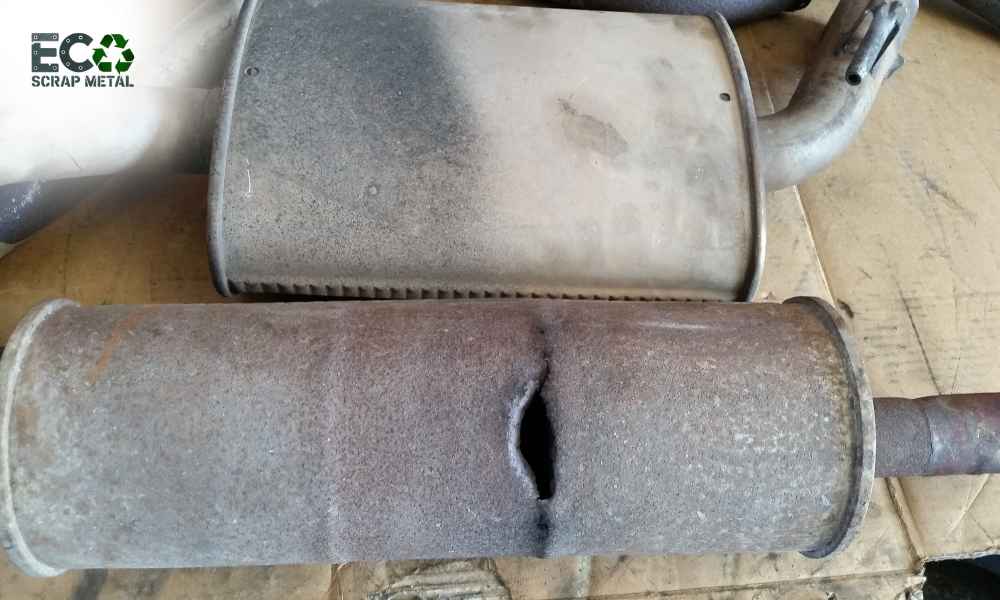
It usually looks like a metal canister with exhaust pipes entering and exiting both ends.
Some vehicles have one converter, while larger vehicles or performance cars may have two or more.
Step 3: Check How It’s Attached
There are generally two installation methods.
Bolted Catalytic Converter
If bolts connect the converter to the exhaust pipes:
- Spray penetrating lubricant on all bolts.
- Allow several minutes for the lubricant to work.
- Remove the bolts using the appropriate socket or wrench.
This is the easiest and cleanest removal method.
Welded Catalytic Converter
If the converter has been welded to the exhaust system:
- Use a reciprocating saw with a metal cutting blade.
- Cut through the exhaust pipe several centimetres away from the weld.
- Make straight cuts to minimise damage.
Take care not to cut fuel lines, brake lines, oxygen sensor wiring, or other nearby components.
Step 4: Remove Oxygen Sensors (If Required)
Many catalytic converters have oxygen sensors installed before or after the converter.
If you plan to sell the converter separately or reuse the sensors:
- Disconnect the electrical connector.
- Remove the sensor using an oxygen sensor socket.
Avoid damaging the sensor threads.
Step 5: Inspect the Catalytic Converter
After removal, inspect it for:
- Cracks
- Missing honeycomb material
- Severe rust damage
- Physical impact damage
Converters in better condition generally receive higher scrap prices because the internal materials are easier to process.
Where Should You Sell It?
Always sell your catalytic converter to a licensed scrap metal recycler.
A reputable recycler will:
- Verify ownership if required
- Accurately identify the converter
- Provide a fair market price
- Recycle the materials responsibly
Avoid selling to unlicensed buyers or anyone offering unusually high cash payments without documentation.
Is It Legal to Remove a Catalytic Converter?
If the vehicle is still being driven on public roads, removing the catalytic converter without replacing it is generally illegal because it increases harmful emissions and may cause the vehicle to fail roadworthy inspections.
If the vehicle is being dismantled for recycling or scrapped entirely, removing the catalytic converter before disposal is usually acceptable, provided you own the vehicle and follow local regulations.
Always check your state’s environmental and vehicle regulations before removing emissions equipment.
Common Mistakes to Avoid
Many people accidentally reduce the value of their catalytic converter by making simple mistakes.
Avoid:
- Working on a hot exhaust system
- Supporting the vehicle with only a jack
- Cutting too close to the converter housing
- Damaging oxygen sensors unnecessarily
- Selling to unlicensed scrap buyers
- Attempting removal without proper safety equipment
Taking your time can help maximise both safety and the scrap value.
Should You Remove It Yourself?
If the converter is bolted on and you have basic mechanical experience, removing it yourself can be straightforward.
However, if it’s heavily rusted, welded in place, or difficult to access, hiring a mechanic may be safer and could prevent costly damage to the exhaust system.
Professional removal is often worth considering, especially for newer vehicles with multiple sensors and complex exhaust systems.
Final Thoughts
Removing a catalytic converter for scrap can be worthwhile because of the valuable precious metals inside. However, safety should always come first. Use the correct tools, properly support the vehicle, wear protective equipment, and ensure you comply with local laws before beginning the job.
Whether you’re dismantling an old vehicle or recycling parts, selling your catalytic converter to a trusted, licensed scrap metal recycler ensures you receive a fair price while supporting environmentally responsible recycling practices.